
1. Introduction – The Story
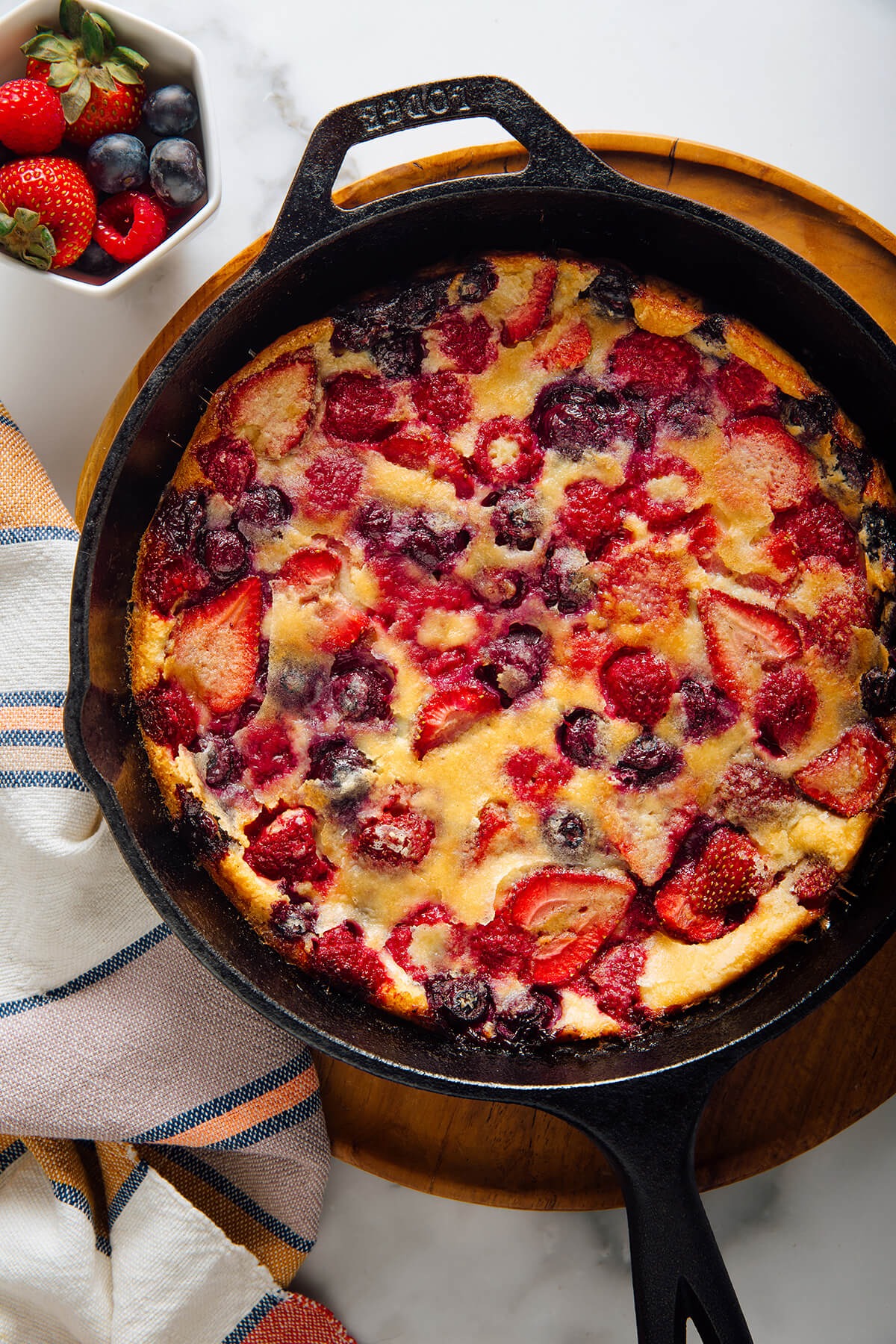
The first time I baked clafoutis, I was looking for a dessert that felt “French café,” but didn’t require a crust, a mixer, or a full afternoon in the kitchen. What came out of the oven was pure magic: a custardy, lightly puffed pancake-like bake with juicy fruit pockets and crisp, golden edges. Since then, clafoutis has become my favorite low-effort, high-reward dessert—especially when berries are in season. It’s special because it looks elegant, yet it’s as simple as whisking a batter and pouring it over fruit.
- 1. Introduction – The Story
- 2. Why You Will Love This Recipe
- 3. Ingredients
- 4. Required Equipment
- 5. Step-by-Step Guide
- Step 1: Gather Ingredients and Prep Your Berries
- Step 2: Butter and Sugar the Skillet, Then Add Fruit
- Step 3: Make the Batter—Smooth, Thin, and Lump-Free
- Step 4: Pour the Batter Over the Fruit
- Step 5: Bake Until Golden, Puffy, and Just Set
- 6. Pro Tips & Variations
- 7. Nutritional Information per Serving
- 8. FAQ
- 9. Conclusion
2. Why You Will Love This Recipe
- Bold Fruit Flavor in Every Bite: Fresh berries bake into jammy bursts that balance the creamy custard.
- Effortless “French Dessert” Vibes: Clafoutis is a classic French baked custard that’s shockingly easy for how impressive it looks.
- Perfect for Brunch or Dessert: Serve it warm with powdered sugar, or chilled like a sliceable custard—either way it feels special.
3. Ingredients
| Ingredient | Quantity | Pro Tip |
|---|---|---|
| Mixed berries (strawberries, blueberries, raspberries) | 3 cups total | Pat berries dry so excess water doesn’t thin the batter. |
| Eggs | 3 large | Room-temperature eggs whisk more smoothly and help the clafoutis puff. |
| Whole milk | 1 cup (240 ml) | Whole milk gives a richer custard, but 2% works too. |
| Heavy cream (optional) | 1/4 cup (60 ml) | Swap in for part of the milk for a more luxurious texture. |
| Granulated sugar | 1/3 cup (65 g) | Start with less if your fruit is very sweet. |
| All-purpose flour | 1/2 cup (60 g) | Sift or whisk well to avoid lumps. |
| Vanilla extract | 2 tsp | Vanilla pairs beautifully with berries; don’t skip it. |
| Fine salt | 1/4 tsp | Salt makes the fruit and vanilla taste brighter. |
| Unsalted butter | 2 tbsp (for pan + batter) | Use softened butter to grease the pan thoroughly. |
| Powdered sugar (to finish) | 1–2 tbsp | Dust right before serving for the prettiest look. |
4. Required Equipment
- 10-inch cast iron skillet or baking dish
- Mixing bowl
- Whisk
- Measuring cups/spoons
- Fine-mesh sieve (optional for flour/powdered sugar)
- Spatula
- Oven mitts
- Cooling rack (optional)
5. Step-by-Step Guide
Step 1: Gather Ingredients and Prep Your Berries
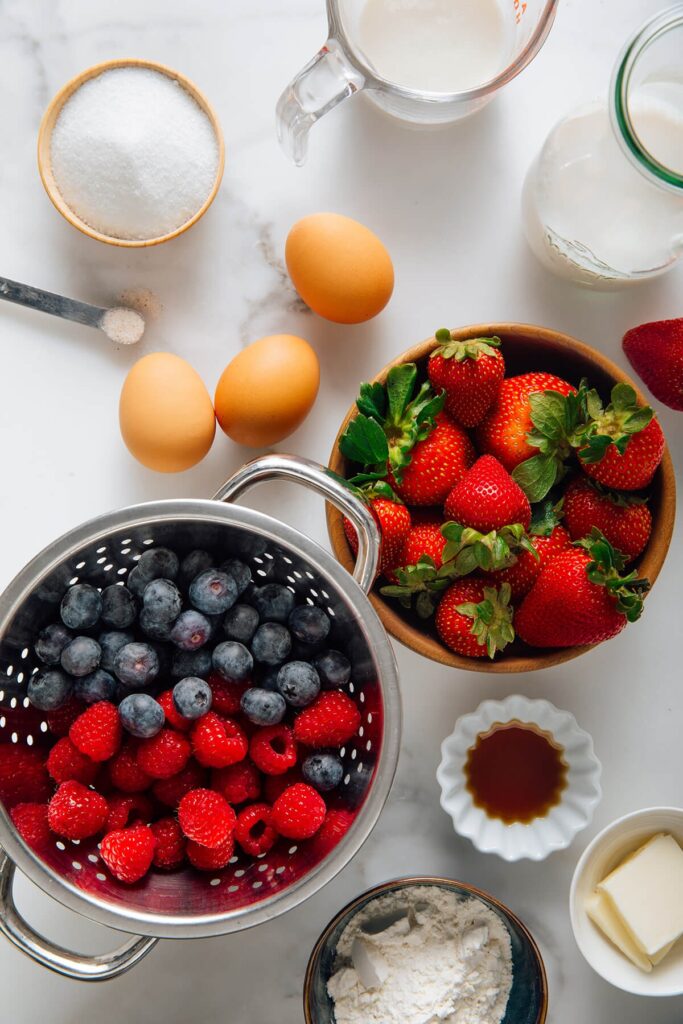
Start by measuring everything out so the batter comes together quickly: eggs, milk, sugar, flour, vanilla, salt, butter, and your berries. Rinse the berries gently and pat them dry—extra water can make the clafoutis take longer to set. If you’re using strawberries, slice or halve them so they distribute evenly and bake tender without sinking too much. Preheat your oven to 375°F (190°C) so the clafoutis starts puffing immediately when it hits the heat.
Pro Tip: Room-temperature dairy and eggs help the custard bake more evenly and reduce the chance of a rubbery texture.
Step 2: Butter and Sugar the Skillet, Then Add Fruit
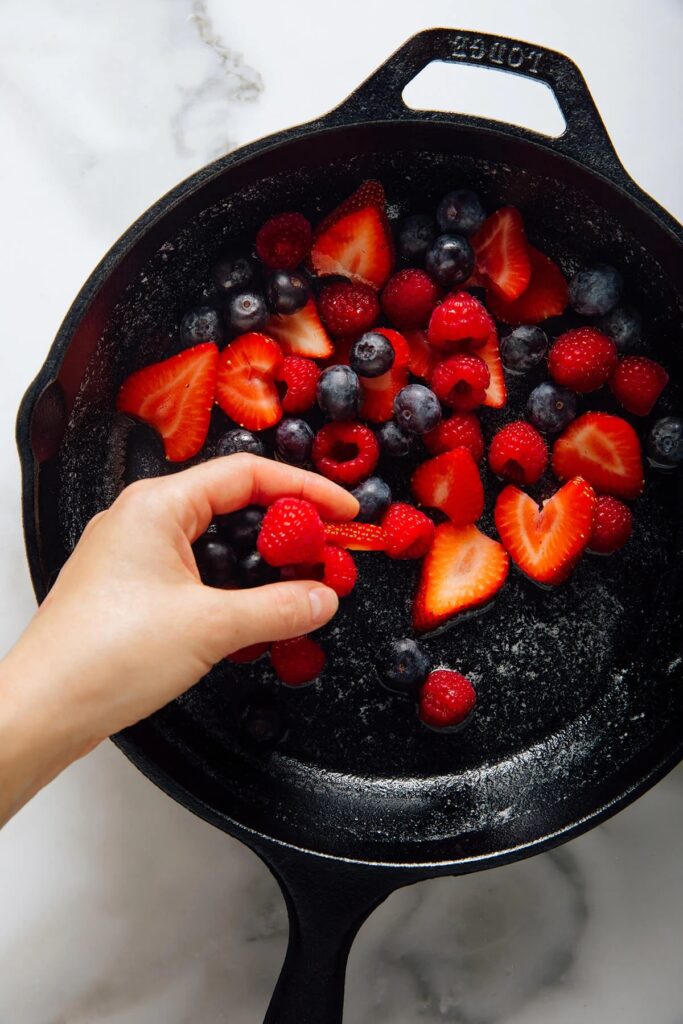
Grease your skillet or baking dish generously with butter, making sure you cover the sides—clafoutis likes to climb as it puffs. For an extra delicate crust, sprinkle a light dusting of sugar inside the buttered pan; it caramelizes slightly as it bakes. Scatter the berries across the bottom in an even layer so every slice gets a mix of fruit. This step sets up the beautiful “fruit-studded” look that makes clafoutis so charming.
Pro Tip: Don’t pack the berries too tightly—leaving a little space helps the custard settle around them instead of pooling on top.
Step 3: Make the Batter—Smooth, Thin, and Lump-Free
In a mixing bowl, whisk eggs and sugar until the mixture looks glossy and slightly lighter in color. Whisk in milk (and cream, if using), vanilla, and salt, then add flour and whisk until smooth. The batter should be pourable—thinner than pancake batter—so it spreads easily around the berries and bakes into a custard. Let the batter rest for 5 minutes while you tidy up; it helps flour hydrate and reduces lumps.
Pro Tip: If you see stubborn flour lumps, strain the batter through a fine-mesh sieve for an ultra-silky custard.
Step 4: Pour the Batter Over the Fruit
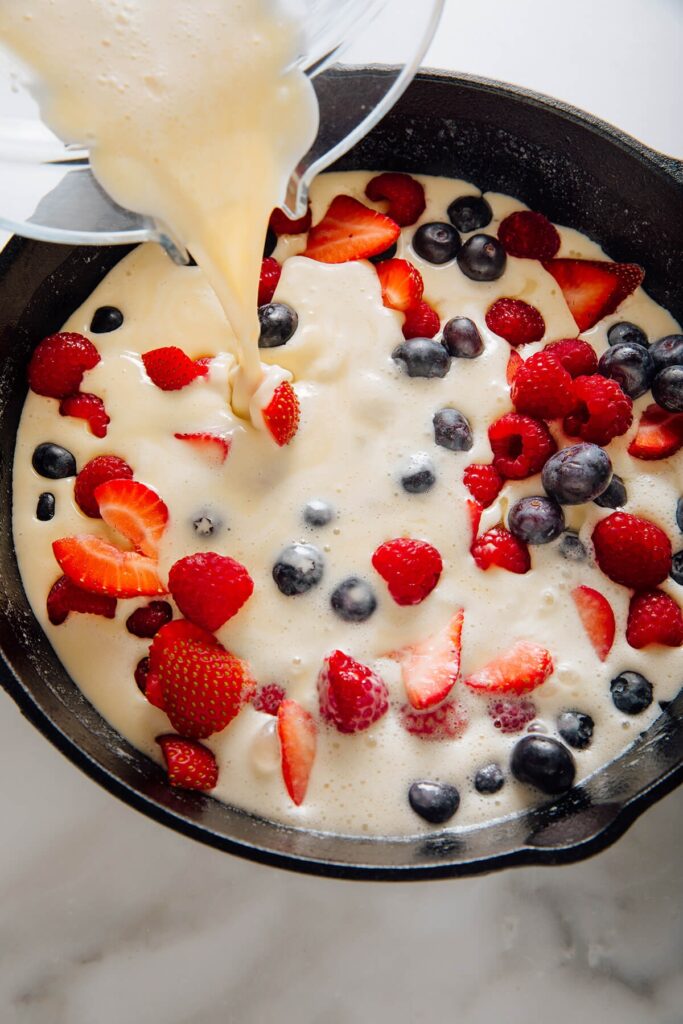
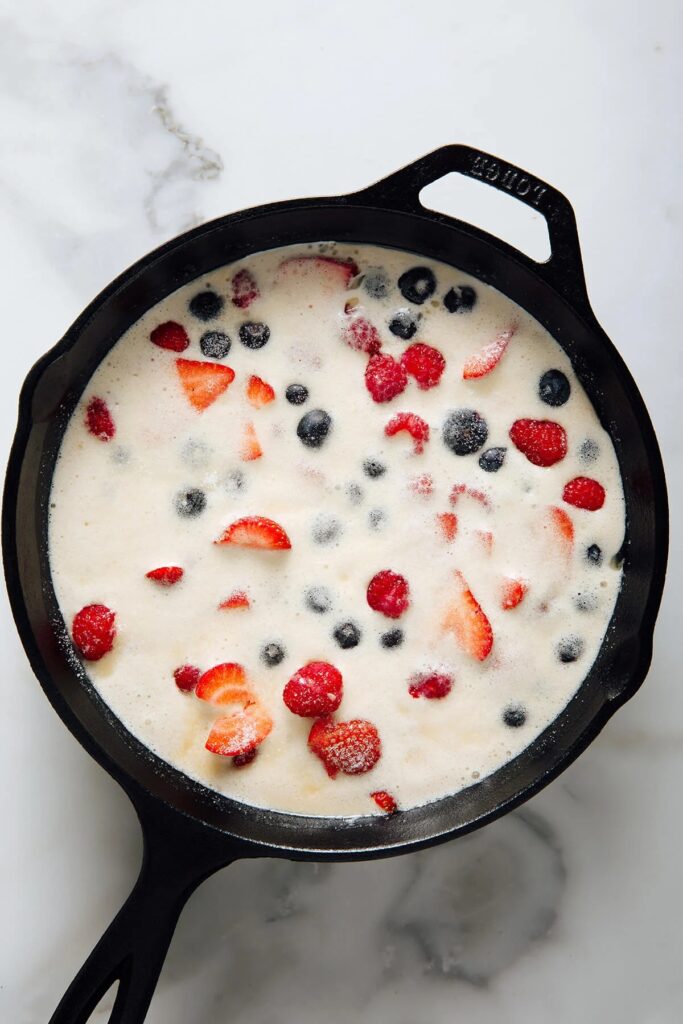
Slowly pour the batter into the skillet over the berries, aiming for an even pour so the fruit doesn’t all shift to one side. Some berries will float and some will peek through—this is normal and gives clafoutis its rustic, bakery-style look. Tap the skillet gently on the counter once to release air bubbles and help the custard settle. Now it’s ready for the oven, where it will puff dramatically before settling into a tender custard.
Pro Tip: Pour from the edge toward the center to keep the berry layer more evenly distributed.
Step 5: Bake Until Golden, Puffy, and Just Set
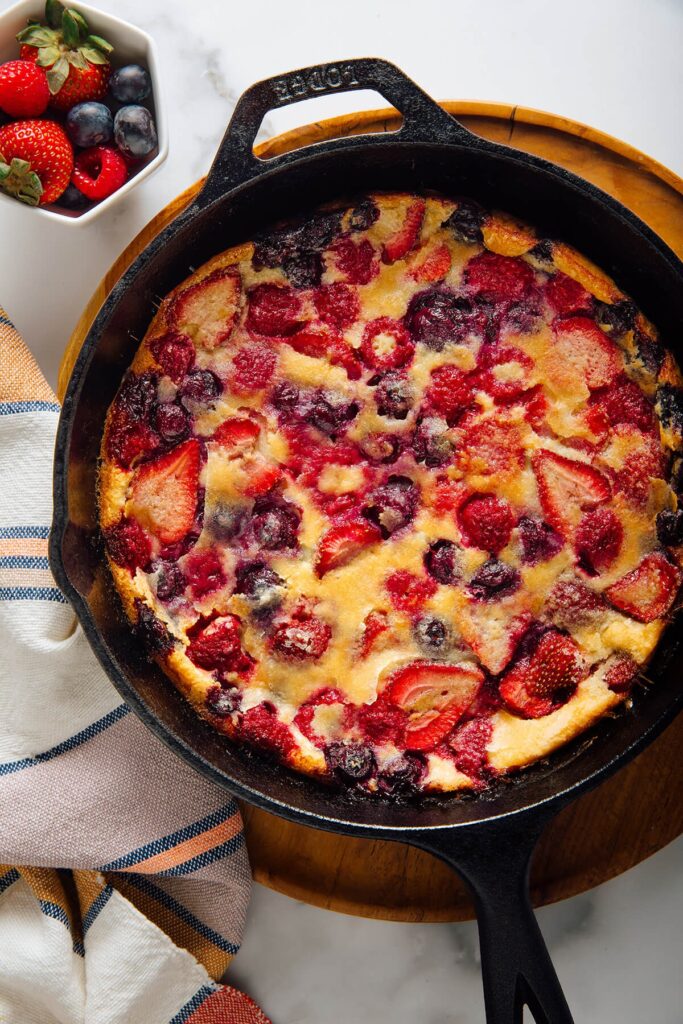
Bake for 30–40 minutes, until the edges are deeply golden and the center looks set but still has a slight jiggle (like a custard). The clafoutis will puff up in the oven and then sink slightly as it cools—this is exactly what should happen. Let it cool for 10–15 minutes before slicing so the custard firms and the pieces hold together neatly. If you like it more custardy, serve warm; if you like it more sliceable, let it cool longer.
Pro Tip: If the top browns too quickly, tent loosely with foil for the last 8–10 minutes.
6. Pro Tips & Variations
3 expert tips
- Don’t overbake: Clafoutis continues to set as it cools. Overbaking can make it rubbery instead of silky.
- Use dry fruit: Pat berries dry and avoid overly juicy, thawed fruit unless you drain it well—extra liquid can prevent the custard from setting.
- Serve with contrast: A dollop of whipped cream, Greek yogurt, or crème fraîche adds tang and makes the fruit taste brighter.
2 variation ideas
- Classic Cherry Clafoutis: Use pitted (or traditional unpitted) cherries and add 1/2 tsp almond extract for the most classic French version.
- Citrus-Lavender Twist: Add 1 tsp lemon zest and a tiny pinch of culinary lavender to the batter for a fragrant, springy flavor.
7. Nutritional Information per Serving
(Approximate, based on 8 servings.)
| Nutrient | Quantity |
|---|---|
| Calories | 170 kcal |
| Protein | 5 g |
| Carbohydrates | 23 g |
| Fat | 7 g |
| Fiber | 2 g |
| Sugar | 14 g |
8. FAQ
1) What is clafoutis, exactly?
Clafoutis is a traditional French baked dessert made by pouring a thin custard batter over fruit (often cherries) and baking until puffed and set. The texture is somewhere between a pancake, a flan, and a Dutch baby—soft, custardy, and lightly sweet.
2) Can I use frozen berries?
Yes, but it takes a little care. Use berries straight from frozen and expect a few extra minutes of baking time. If they release a lot of liquid, the center may need longer to set, so keep an eye on the jiggle and use foil if the top browns early.
3) How should I store leftover clafoutis?
Store covered in the fridge for up to 3 days. Clafoutis is delicious chilled, or you can warm slices gently in the microwave for 15–20 seconds. Dust with powdered sugar right before serving (it dissolves if added too early).
9. Conclusion
Clafoutis is the kind of dessert that makes you feel like you baked something fancy, even though it’s as easy as whisking and pouring. With sweet berries, a silky custard, and golden edges, it’s perfect for brunch, dessert, or an “I need something sweet tonight” moment.