

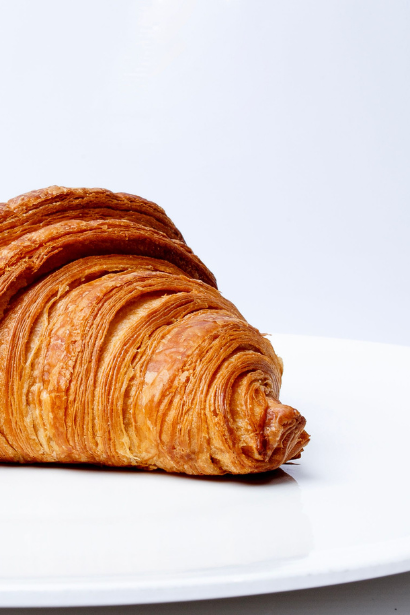
Parisian Breakfast Delight features golden, flaky, homemade croissants with a tender, honeycomb interior, paired with a perfectly balanced café au lait strong French roast coffee with steamed milk. The croissants take a day to prepare (with chilling and folding), but the result is pure French bakery magic.
- What Are Croissants and Café au Lait?
- Why You’ll Love This Recipe
- Ingredients
- For the Croissant Dough
- For the Butter Block
- For the Egg Wash
- For the Café au Lait (4 servings)
- Ingredient Notes
- Ingredient Substitutions
- Equipment
- Step‑by‑Step Instructions
- Part 1: Make the Dough (Day 1, Morning)
- Step 1: Proof the Yeast
- Step 2: Mix the Dough
- Step 3: Chill the Dough
- Part 2: Prepare the Butter Block
- Step 4: Shape the Butter
- Part 3: Laminate the Dough – The Folding Process
- Step 5: First Turn (Letter Fold)
- Step 6: Second Turn
- Step 7: Third Turn
- Part 4: Shape the Croissants (Day 2)
- Step 8: Roll and Cut
- Step 9: Shape
- Step 10: Proof
- Part 5: Bake
- Step 11: Preheat and Egg Wash
- Step 12: Bake
- Part 6: Make the Café au Lait
- Step 13: Brew the Coffee
- Step 14: Heat the Milk
- Step 15: Assemble
- Expert Chef Tips
- Troubleshooting
- Recipe Variations
- Serving Suggestions
- Storage & Reheating
- Frequently Asked Questions
- Nutrition
- Recipe Card
| Prep Time (Croissants) | 30 minutes (plus 8+ hours chilling) |
|---|---|
| Cook Time | 15 – 18 minutes |
| Total Time | ~24 hours (including chilling) |
| Servings | 12 croissants, 4 cups café au lait |
| Calories | ~280 per croissant, ~80 per café au lait |
| Difficulty | Medium (requires patience) |
| Best Occasion | Weekend baking, special breakfasts, French-themed brunch, when you want to impress |
There’s a moment in Paris, the first morning of a trip, when you step out of your hotel and the air is cool and crisp that you smell it. The warm, buttery aroma of fresh croissants drifting from a nearby boulangerie. It’s the scent of a perfect morning, the promise of flaky, golden layers melting on your tongue, and a steaming bowl of café au lait to dip them in.
I’ll never forget my first Parisian breakfast. I was sitting at a tiny marble‑topped table in a café on the Left Bank, watching the city wake up. The waiter placed a basket of croissants in front of me golden, crescent‑shaped, impossibly flaky. When I broke one open, the steam escaped in a fragrant cloud, revealing a honeycomb of buttery layers. I dipped it into my café au lait, and I knew I had discovered something sacred.
For years, I assumed that making croissants at home was impossible, that it was a skill reserved for French bakers with decades of experience. But after dozens of attempts (and plenty of disappointments), I cracked the code. The secret is patience cold butter, gentle folding, and plenty of chilling time. The reward? The most incredible croissants you’ll ever taste, fresh from your own oven.
This recipe will walk you through the entire process – from mixing the dough, to rolling and folding in the butter block, to shaping and proofing the croissants. And I’m including my favorite café au lait recipe to complete the experience. It’s a labor of love, but I promise you – the first bite is worth every minute.
Let’s bring a little bit of Paris to your kitchen.
What Are Croissants and Café au Lait?
A croissant is a buttery, flaky, crescent‑shaped French pastry made from a laminated dough – a dough that is rolled and folded multiple times to create dozens of thin layers of butter and dough. The result is a pastry that’s golden and crisp on the outside, with a tender, airy, honeycomb interior.
Café au lait (literally “coffee with milk” in French) is a classic French breakfast drink made with strong, dark‑roast coffee and an equal amount of hot, steamed milk, served in a wide, bowl‑like cup. It’s traditionally enjoyed alongside croissants, perfect for dipping.
Flavor & Texture Profile
- Croissant: Rich, buttery, and lightly sweet, with a crisp, golden exterior and a tender, airy, honeycomb interior. The layers are delicate and flaky
- Café au Lait: Smooth, bold, and slightly bitter from the dark‑roast coffee, balanced with the creamy, velvety sweetness of steamed milk
- Why people love it: It’s the quintessential French breakfast – simple, elegant, and deeply satisfying. The croissant is pure indulgence, and the café au lait is the perfect companion
Why You’ll Love This Recipe
- Authentic French croissants – Golden, flaky, and impossibly buttery – just like a Parisian boulangerie
- Made from scratch with real butter – No shortcuts – pure, rich European‑style butter creates the perfect layers
- Step‑by‑step instructions – Detailed guidance for every step, including lamination, folding, and shaping
- Perfect café au lait – A simple, balanced recipe using the classic 1:1 ratio of coffee to milk
- Impressive results – Your friends and family will be amazed when you serve these fresh croissants
- Freezer‑friendly – Freeze unbaked croissants for a future treat – proof and bake straight from the freezer
- Worth the effort – The process is a labor of love, but the result is absolutely unbeatable
- Perfect for a special occasion – A French‑themed brunch, Valentine’s Day, Mother’s Day, or any day you want to feel special
- Better than store‑bought – Nothing compares to a croissant fresh from your own oven
- Builds confidence – Once you’ve mastered croissants, you’ll feel like a true baker
Ingredients
For the Croissant Dough
| Ingredient | Amount | Notes |
|---|---|---|
| All‑purpose flour (or bread flour) | 4 cups (500g) | High‑protein flour gives better structure |
| Granulated sugar | ¼ cup (50g) | |
| Active dry yeast | 2¼ teaspoons (1 packet) | Or 1¾ teaspoons instant yeast |
| Kosher salt | 2 teaspoons (12g) | |
| Whole milk | 1 cup (240ml) | Warm, about 100°F |
| Unsalted butter (European‑style recommended) | 3 tablespoons (42g) | Melted and cooled |
For the Butter Block
| Ingredient | Amount | Notes |
|---|---|---|
| Unsalted butter (European‑style) | 1½ cups (3 sticks / 340g) | Very cold, high‑fat butter (82%+ fat) |
For the Egg Wash
| Ingredient | Amount | Notes |
|---|---|---|
| Large egg | 1 | Beaten with 1 tablespoon of milk |
For the Café au Lait (4 servings)
| Ingredient | Amount | Notes |
|---|---|---|
| Freshly brewed strong coffee | 2 cups | French roast or dark roast, brewed strong |
| Whole milk | 2 cups | Steamed or heated until hot |
Ingredient Notes
The Butter: This is the most important ingredient. Use a high‑fat European‑style butter (82%+ butterfat) like Plugrá, Kerrygold, or President. It creates the perfect flaky layers and rich flavor. American butter (80% fat) has more water, which can make the croissants less flaky.
The Flour: Bread flour or all‑purpose flour both work. Bread flour has more protein, which gives the croissants better structure and lift. If you use all‑purpose flour, the croissants will still be delicious but slightly less tall.
The Yeast: Active dry yeast should be proofed in the warm milk with a pinch of sugar for 5–10 minutes until foamy. If you’re using instant yeast, you can add it directly to the dry ingredients.
The Temperature: Keep everything cold – the butter block especially. If the butter gets too warm, it will melt into the dough instead of creating distinct layers. If the dough gets too warm during rolling, chill it before continuing.
Ingredient Substitutions
| Dietary Need | Substitution |
|---|---|
| Gluten‑Free | Use a high‑quality gluten‑free flour blend designed for pastries – but note that croissants are very difficult to make GF |
| Dairy‑Free | Use vegan butter with high fat content and plant‑based milk – texture will be different |
| Vegan | Use vegan butter and plant‑based milk – the croissants will be less rich but still flaky |
Equipment
Essential Tools:
- Stand mixer with dough hook (or a large bowl and wooden spoon)
- Rolling pin
- Ruler (for precise measurements)
- Parchment paper
- Baking sheets
- Plastic wrap
- Pastry brush
- Sharp knife or pizza cutter
- Cooling rack
Nice‑to‑Have: A bench scraper, a pastry wheel (for cutting triangles), a kitchen scale (for precise measurements).
Step‑by‑Step Instructions
Part 1: Make the Dough (Day 1, Morning)
Step 1: Proof the Yeast
Warm the milk to about 100°F (it should be warm to the touch, not hot). Add a pinch of sugar and the yeast. Let it sit for 5–10 minutes until it becomes foamy and fragrant.
Step 2: Mix the Dough
In the bowl of a stand mixer fitted with a dough hook, combine the flour, sugar, and salt. Add the yeast mixture and the melted butter. Mix on low speed until a shaggy dough forms, about 2 minutes. Increase speed to medium and knead for 5–6 minutes until the dough is smooth and elastic.
Step 3: Chill the Dough
Shape the dough into a ball, place it in a lightly oiled bowl, cover with plastic wrap, and refrigerate for at least 2 hours, or up to overnight.
Part 2: Prepare the Butter Block
Step 4: Shape the Butter
While the dough chills, prepare the butter block. Place the cold butter between two sheets of parchment paper and pound it with a rolling pin until it flattens. Then roll it into a 6×8‑inch rectangle, about ½‑inch thick. Wrap in parchment and refrigerate.
Part 3: Laminate the Dough – The Folding Process
Step 5: First Turn (Letter Fold)
Roll the chilled dough into a 10×18‑inch rectangle. Place the chilled butter block in the center, fold the dough over the butter to enclose it, and pinch the edges to seal. Roll the dough into a 10×24‑inch rectangle. Fold it like a letter – fold the top third down, and the bottom third up. Wrap and refrigerate for 30 minutes.
Step 6: Second Turn
Remove the dough from the refrigerator. Rotate it 90 degrees and roll it out again into a 10×24‑inch rectangle. Fold it into thirds again. Wrap and refrigerate for 30 minutes.
Step 7: Third Turn
Repeat the rolling and folding process one more time. After the third turn, wrap the dough tightly and refrigerate for at least 2 hours, or up to overnight.
Part 4: Shape the Croissants (Day 2)
Step 8: Roll and Cut
Roll the chilled dough into a large rectangle about ¼‑inch thick, measuring roughly 18×24 inches. Using a ruler, mark and cut the dough into triangles with a base of about 5 inches and a height of 10 inches. You should get about 12 triangles.
Step 9: Shape
Make a small cut at the base of each triangle (about 1 inch). Gently stretch the triangle, then roll from the base to the tip, tucking the tip underneath to prevent unrolling. Curve the ends into a crescent shape.
Step 10: Proof
Place the shaped croissants on lined baking sheets, leaving space between them. Cover loosely with plastic wrap and let them proof at room temperature for 2–3 hours, until they are puffed and wobbly. They should jiggle when you shake the pan.
Part 5: Bake
Step 11: Preheat and Egg Wash
Preheat the oven to 400°F (200°C). Gently brush the croissants with the egg wash, being careful not to deflate them.
Step 12: Bake
Bake for 12–15 minutes, then reduce the temperature to 375°F (190°C) and bake for another 8–10 minutes, until deeply golden brown and crisp. Let cool on a wire rack for 10 minutes before serving.
Aroma Cue: The rich, buttery, warm scent will fill your kitchen – this is the smell of Paris.
Part 6: Make the Café au Lait
Step 13: Brew the Coffee
Brew a strong pot of dark‑roast coffee – use about 2 tablespoons of ground coffee per cup of water for a robust flavor.
Step 14: Heat the Milk
Heat the milk in a small saucepan over medium heat until steaming (do not boil). Froth with a handheld frother if desired.
Step 15: Assemble
Pour equal parts hot coffee and hot milk into wide bowls or large mugs. Serve immediately with the warm croissants.
Expert Chef Tips
- Keep everything cold: The key to flaky croissants is keeping the butter cold throughout the lamination process. If the butter softens, stop and chill the dough.
- Measure precisely: Use a ruler to ensure your dough is the right size for each turn – this matters more than you think.
- Proof until wobbly: The croissants are ready to bake when they’re puffed and jiggle when you shake the pan. If they don’t proof enough, they’ll be dense.
- Don’t overproof: If the croissants are proofing in a warm kitchen, check them earlier – overproofed croissants will collapse in the oven.
- Use European butter: Higher fat content = better layers and richer flavor. It’s worth the splurge.
- Be patient: Croissants are a two‑day project. Don’t rush the chilling and proofing steps – they’re essential for success.
- Practice makes perfect: Your first batch might not be perfect, but they’ll still be delicious. Learn from each attempt and keep baking.
Troubleshooting
| Problem | Cause | Solution |
|---|---|---|
| Butter leaks out during rolling | Butter was too warm or dough wasn’t chilled enough | Chill the dough thoroughly; work quickly; refrigerate between turns |
| Croissants are dense and not flaky | Not enough layers or butter melted into dough | Keep butter cold; make sure you’re doing the full 3 turns; don’t overproof |
| Croissants didn’t rise | Yeast was dead or dough was too cold | Proof the yeast; proof croissants in a warm spot (75–80°F) |
| Croissants collapsed in the oven | Overproofed or not enough gluten development | Proof until wobbly but not puffed too much; knead dough well |
| Croissants are pale | Oven temperature too low | Preheat to 400°F and bake until deeply golden |
Recipe Variations
- Pain au Chocolat: Place a strip of dark chocolate on each triangle before rolling – a classic French favorite.
- Almond Croissants: Fill with almond paste and top with sliced almonds before baking.
- Ham and Cheese Croissants: Add a slice of ham and grated Gruyère before rolling for a savory version.
- Whole Wheat Croissants: Substitute 2 cups of the flour with whole wheat pastry flour – they’ll be nuttier and more rustic.
- Sourdough Croissants: Add ½ cup of sourdough starter to the dough (reduce milk by ½ cup) – they’ll have a tangy flavor.
Serving Suggestions
Classic pairings: Fresh croissants and café au lait with a bowl of fresh fruit and a little pot of jam. A glass of fresh orange juice adds a bright contrast.
Presentation idea: Arrange the croissants in a basket lined with a linen napkin. Serve the café au lait in wide, bowl‑like cups on a beautiful tray. A small vase with a single rose or a sprig of lavender adds a French touch.
Storage & Reheating
Refrigeration: Baked croissants are best enjoyed fresh but can be stored in an airtight container for up to 2 days.
Freezing (Unbaked): Shape the croissants, place on a baking sheet, and freeze until solid. Transfer to a freezer bag and freeze for up to 3 months. Proof from frozen (add 1–2 hours to proofing time) and bake.
Freezing (Baked): Freeze baked, cooled croissants in a freezer bag for up to 2 months. Reheat in a 350°F oven for 5–7 minutes.
Reheating: Reheat baked croissants in a 350°F oven for 5–7 minutes until warm and crisp. The microwave will soften them – use the oven instead.
Frequently Asked Questions
Why are my croissants not flaky?
Flakiness comes from the layers of butter and dough. If the butter was too warm and melted into the dough, the layers won’t form. Keep everything cold and work quickly.
Can I make croissants with all‑purpose flour?
Yes – all‑purpose flour works, but bread flour gives you a better structure and taller croissants because of the higher protein content.
How long do croissants take to proof?
At room temperature (70–75°F), they take about 2–3 hours. They’re ready when they’re puffed and jiggle like Jell‑O when you shake the pan.
Can I use salted butter for croissants?
It’s better to use unsalted butter so you can control the salt level. If you only have salted, reduce the salt in the recipe by ½ teaspoon.
What is café au lait?
Café au lait is a French breakfast coffee drink made with equal parts strong brewed coffee and hot, steamed milk, served in a wide bowl‑like cup.
How is café au lait different from a latte?
Café au lait uses a 1:1 ratio of coffee to milk and is traditionally served in a bowl. A latte has more milk (about 1:3 coffee to milk) and is served in a tall glass.
Can I freeze unbaked croissants?
Yes – shape them, freeze on a baking sheet, then transfer to a freezer bag. When ready to bake, proof from frozen (add 1–2 hours) and bake as directed.
Why did my butter leak out during baking?
The butter melted out because the dough wasn’t sealed properly or the croissants weren’t proofed enough. Seal the edges tightly and ensure they’re fully proofed before baking.
Can I make croissants without a stand mixer?
Yes – you can mix and knead the dough by hand, but it will take about 10–12 minutes of kneading to develop the gluten.
How many calories are in a croissant?
This recipe has approximately 280 calories per croissant – it’s a rich, buttery pastry, so enjoy it as an occasional treat!
Nutrition
Nutrition values are estimates and may vary based on specific ingredients and portion sizes.
| Nutrient | Per Croissant |
|---|---|
| Calories | ~280 |
| Protein | 6g |
| Carbohydrates | 30g |
| Fat | 16g |
| Saturated Fat | 10g |
| Fiber | 1g |
| Sugar | 4g |
| Sodium | ~180mg |
Recipe Card
Recipe Name: Buttery Croissants, Café au Lait: Parisian Breakfast Delight
Cuisine: French
Course: Breakfast / Pastry
Prep Time: 30 minutes (plus 8+ hours chilling)
Cook Time: 15 – 18 minutes
Total Time: ~24 hours
Servings: 12 croissants, 4 cups café au lait
Calories: ~280 per croissant
Author: [KITCHENFLORA]
Ingredients – Croissant Dough
- 4 cups (500g) all‑purpose or bread flour
- ¼ cup (50g) granulated sugar
- 2¼ teaspoons active dry yeast
- 2 teaspoons (12g) kosher salt
- 1 cup (240ml) whole milk, warm (100°F)
- 3 tablespoons (42g) unsalted butter, melted and cooled
Ingredients – Butter Block
- 1½ cups (340g) unsalted European‑style butter, very cold
Ingredients – Egg Wash
- 1 large egg + 1 tablespoon milk, beaten
Ingredients – Café au Lait
- 2 cups strong brewed dark‑roast coffee
- 2 cups whole milk, steamed or heated
Instructions
- Make dough: Proof yeast in warm milk. Mix with flour, sugar, salt, and melted butter. Knead until smooth. Chill for 2+ hours.
- Prepare butter block: Shape cold butter into a 6×8‑inch rectangle. Chill.
- Laminate: Roll dough into 10×18‑inch rectangle. Place butter in center, fold over, seal. Roll into 10×24‑inch rectangle. Fold in thirds (letter fold). Chill 30 minutes. Repeat for 2 more turns.
- Roll and cut: After final chill, roll dough into 18×24‑inch rectangle, ¼‑inch thick. Cut into triangles (5×10 inches).
- Shape: Make a small cut at the base of each triangle. Roll from base to tip, tucking tip underneath. Curve into crescents.
- Proof: Place on baking sheets, cover, and proof at room temperature for 2–3 hours until puffed and wobbly.
- Bake: Preheat oven to 400°F. Brush with egg wash. Bake 12–15 minutes, then reduce to 375°F and bake 8–10 minutes more until deeply golden.
- Make café au lait: Heat milk and brew strong coffee. Combine equal parts coffee and milk in bowls. Serve with warm croissants.
Notes
- Keep butter cold throughout – this is the key to flaky layers.
- Use European‑style butter (82%+ fat) for the best results.
- Don’t rush the chilling and proofing steps – patience is essential.
- Croissants are a 2‑day project – plan ahead.
- Freeze unbaked croissants for up to 3 months – proof from frozen and bake.
Nutrition (per croissant, approximate)
Calories: 280 | Protein: 6g | Carbs: 30g | Fat: 16g | Fiber: 1g | Sugar: 4g | Sodium: 180mg
These Buttery Croissants and Café au Lait are my way of bringing a little bit of Paris home. The process is a labor of love – but the moment you break open that golden, flaky crust and take your first bite, you’ll know it was worth every minute. The warmth of the café au lait, the buttery layers, the quiet satisfaction of a job well done – that’s the taste of a perfect morning. I hope this recipe fills your kitchen with the spirit of France and your heart with the joy of baking. Bon appétit!